


Buying a Business Vehicle? What the 2026–27 Car Thresholds Mean for You
If you’re planning to buy or lease a vehicle for your business this financial year, there are some updated tax thresholds worth knowing before you make a decision.
From 1 July 2026, new limits apply to vehicle depreciation, GST credits and Luxury Car Tax (LCT). While these figures are updated regularly, they can make a meaningful difference to the after-tax cost of a vehicle particularly if you’re considering a higher-value purchase.
Understanding the thresholds upfront can help you compare your options and avoid unexpected tax consequences later.
How Much of Your Car Can be Depreciated?
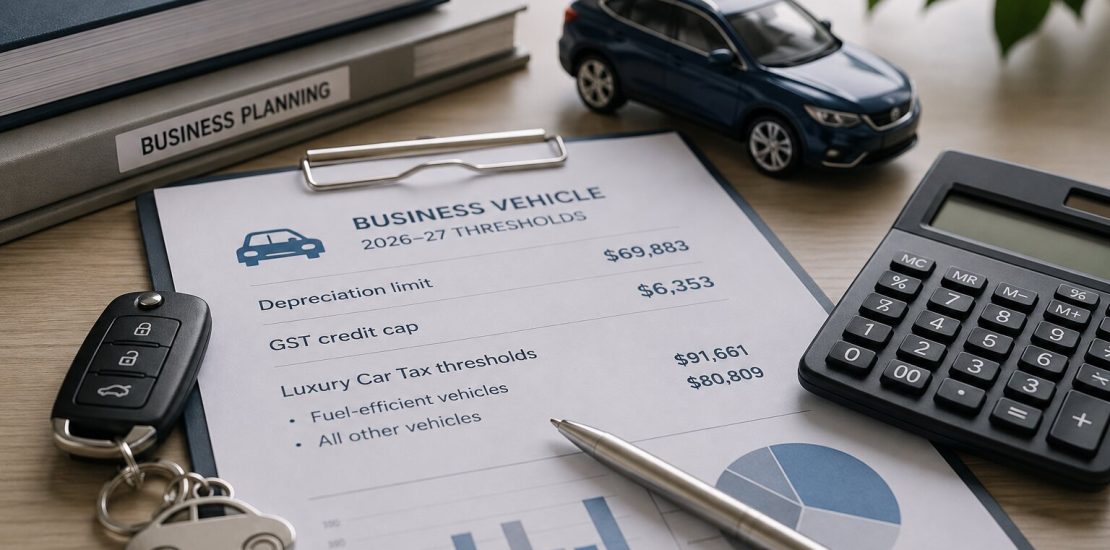
For vehicles first used or leased during the 2026–27 income year, the car limit is $69,883.
This is generally the maximum value that can be used to calculate depreciation deductions for a passenger vehicle, even where the actual purchase price is higher.
For example, if your business purchases a passenger vehicle for more than $69,883, the amount above the car limit will generally not increase the depreciation deductions available.
This doesn’t necessarily mean buying a more expensive vehicle is the wrong commercial decision. The vehicle may offer features or capabilities that make sense for your business. However, it’s worth understanding that spending more won’t necessarily translate into additional depreciation deductions.
Where a vehicle is used for both business and private purposes, deductions will also generally need to be limited to the business-use portion. Keeping appropriate records, including a valid logbook and odometer readings where required, remains important if the ATO reviews your claims.
It’s also worth checking which depreciation rules apply to your business and whether any simplified depreciation concessions are available that could allow deductions to be claimed sooner.
There’s a Limit on GST Credits Too
If your business is registered for GST, you may be able to claim a GST credit when purchasing a vehicle. But for passenger vehicles costing more than the car limit, there’s also a cap on how much GST you can claim.
For 2026–27, the maximum GST credit is $6,353 which is one-eleventh of the $69,883 car limit.
So, even if you spend considerably more on the vehicle, the GST credit will generally remain capped at this amount. It’s also important to remember that when the vehicle is eventually sold, GST will normally apply to the full sale price.
GST credits can provide a useful cash flow benefit when purchasing a business vehicle, so make sure eligible amounts are correctly claimed through your Business Activity Statement (BAS) within the applicable timeframes.
New Luxury Car Tax Thresholds
The LCT thresholds have also increased from 1 July 2026. For the 2026–27 financial year, they are:
- $91,661 for fuel-efficient vehicles
- $80,809 for all other vehicles
Where LCT applies, it is generally charged at 33% of the value above the relevant threshold. This can add considerably to the overall cost of a higher-value vehicle.
If you’re considering a premium vehicle, it’s worth factoring LCT into your calculations before committing to the purchase.
The higher threshold available for fuel-efficient vehicles may also be relevant when comparing different options, including certain hybrid and electric vehicles. Depending on the vehicle, this could reduce the LCT payable while potentially providing lower ongoing running costs.
What to Consider Before Buying
These thresholds apply to vehicles first used or leased from 1 July 2026, so it’s worth looking at the tax implications as part of your purchasing decision rather than after the contract has been signed.
Before going ahead, consider:
- The overall after-tax cost, including depreciation deductions, GST credits and any LCT
- Whether buying or leasing is the better fit for your circumstances
- How much of the vehicle’s use will be business-related and what records you’ll need to keep
- How the purchase will affect your business cash flow and broader financial plans
Whether you’re replacing an existing work vehicle, adding to your fleet or purchasing a vehicle for client-facing activities, looking beyond the sticker price can give you a clearer picture of what the vehicle will actually cost your business.
The Bottom Line
Buying a vehicle can be a significant investment for any business. Tax shouldn’t be the only factor driving the decision, but depreciation limits, GST credits and LCT can all affect the true cost of the purchase.
Before committing to a vehicle, it may be worth running the numbers with your accountant. Planning ahead can help you understand the available tax treatment, avoid unexpected costs and make sure the purchase makes sense within your broader business strategy.
For more information, refer to the ATO’s Small Business Newsroom: Car thresholds from 1 July | Australian Taxation Office, or contact our team to discuss how the updated thresholds may apply to your business.